Old Star
Published:

Template User Rights
Report Card Samples

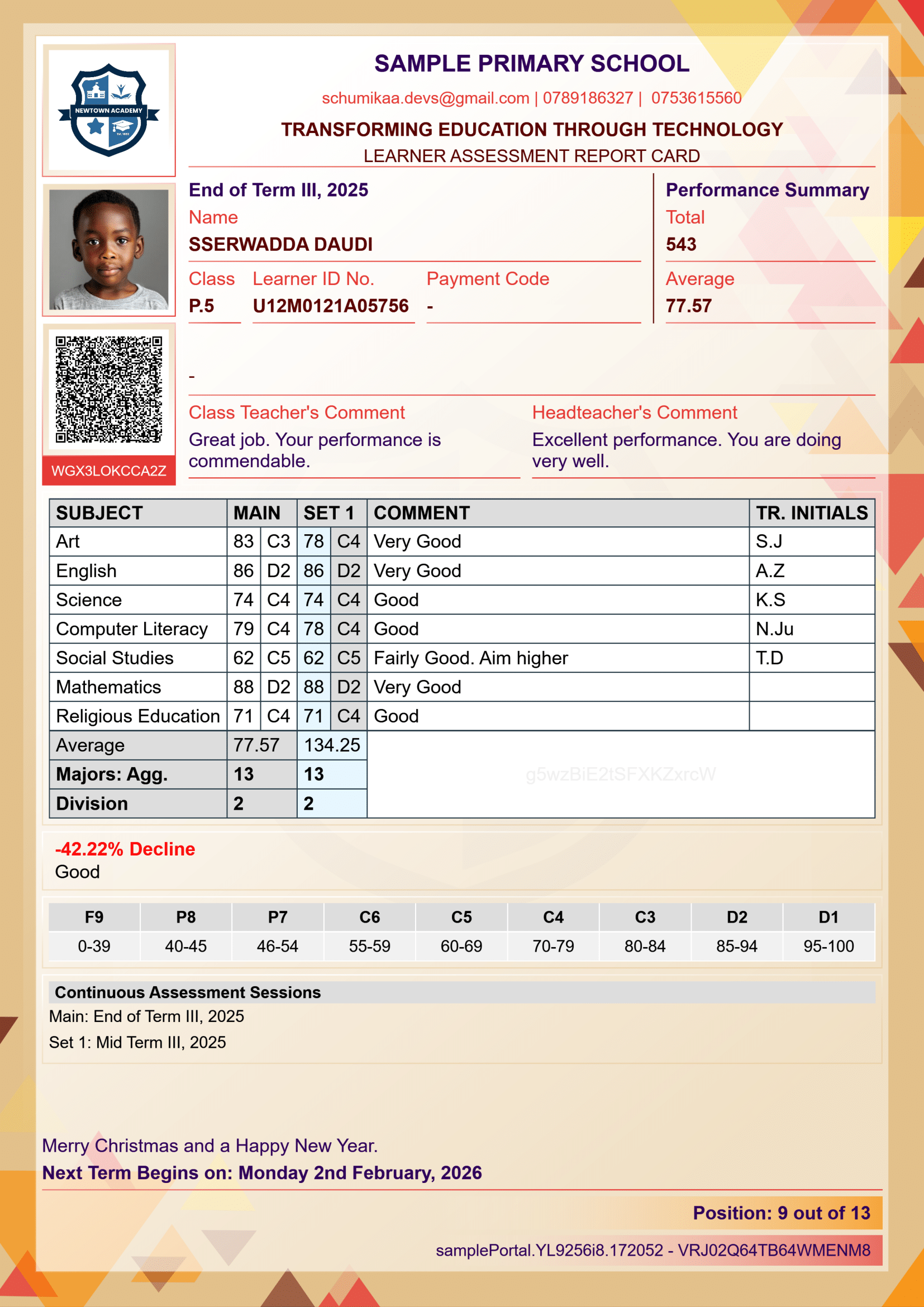
Old Star - The Prestige in Academic Legacy
Old Star is a design built around scholastic authority, ceremonial structure, and the visual language of traditional academic recognition. The template does not attempt to feel emotionally soft or artistically expressive. Instead, it embraces discipline, order, hierarchy, and institutional confidence. It feels like a document created to preserve achievement formally - something official enough to archive, display, stamp, file, and remember.
The design speaks in structure. Everything inside Old Star feels deliberate - sharp borders, rigid tables, aligned spacing, institutional framing. Nothing drifts casually across the page. Every section appears governed by academic order. This creates the immediate impression of educational seriousness.
Old Star resembles the atmosphere of traditional school report books, end-of-year merit sheets, institutional archives, formal academic ceremonies. The template feels less like a modern dashboard and more like a respected educational record - it carries weight.
Core Design Character
Old Star is shaped by six visual and emotional characteristics.
1. Institutional Structure
The strongest identity of Old Star is structure. The layout is heavily grid-oriented. Information is compartmentalized into clearly bordered sections that visually reinforce discipline and accountability. This structural rigidity creates psychological order. The viewer immediately understands;
- Where identity information belongs
- Where performance is measured
- Where authority speaks
- Where rankings are validated
- Where academic interpretation happens
Nothing feels decorative for its own sake - the design behaves like an institution. This is what gives Old Star its administrative confidence.
2. Ceremonial Formality
Old Star feels ceremonial because of how performance is presented. Totals, averages, commentary are not quietly hidden - they are elevated visibly and intentionally. The learner’s academic identity becomes central to the visual hierarchy. The document resembles a certificate of progression, a formal assessment record, a merit acknowledgement sheet, a recognized institutional document. This transforms scores into recognition.
The learner appears officially evaluated within a respected academic system.
3. Traditional Academic Authority
Old Star carries the visual DNA of traditional schooling systems. The bordered tables, performance blocks, grading references, and symmetrical alignment all resemble long-established educational formatting traditions. The design feels tested, stable, reliable, administrative, academically mature.
Nothing about the template feels experimental - it feels inherited, like a system schools have relied on for years.
4. Geometric Discipline
The template uses geometry not as decoration, but as control. Rectangular sections dominate the page. Even the decorative triangles in the background maintain angular consistency with the overall structure. This repetition of geometry creates visual stability.
The design therefore feels engineered rather than illustrated. That precision reinforces the psychology of measurable academic performance.
5. Controlled Warmth
Despite its institutional nature, Old Star avoids becoming emotionally cold. The warm cream background softens the intensity of the rigid layout. Without this warmth, the design could easily feel bureaucratic or overly mechanical. Instead, the cream tones introduce paper-like softness, archival warmth, educational familiarity, human accessibility. The warmth feels subtle and restrained - not emotional, not sentimental but simply humane.
This balance is one of the template’s most important qualities.
6. Visible Accountability
Old Star is unapologetically performance-oriented. The positioning performance metrics and trend indicators all contribute to a culture of visible academic measurement. The design communicates that achievement can be quantified, excellence has hierarchy, academic standing matters.
This creates motivational pressure through visibility. Unlike reflective templates that soften evaluation emotionally, Old Star formalizes evaluation publicly and structurally.
Design Language Breakdown
Cream Paper Foundation: The cream background resembles official report paper, certificate stock, institutional documents preserved over time. Unlike bright white, the cream tone feels aged slightly by memory and use.
This gives the design a subtle archival character. The document therefore feels physical rather than digital.
Crimson Performance Accents: The strong red headings and dividers introduce urgency, visibility, and authority. These accents naturally draw attention toward learner identity, performance summaries, performance comments and critical assessment areas. The red tones resemble grading ink, official annotations, academic emphasis markings, ceremonial educational formatting. They inject energy into the otherwise disciplined structure.
Deep Academic Indigo: The dark indigo typography reinforces educational seriousness. It stabilizes the stronger red accents while maintaining readability and intellectual weight.
Precision Table Architecture: The tabular structure is the emotional backbone of Old Star. The visible grids communicate organization, comparison, measurement, evaluation, clarity. This transforms educational performance into structured academic evidence.
Angular Decorative Overlays: The triangular overlays in the corners introduce ceremonial movement without disturbing the rigid academic layout. They resemble academic insignias, institutional banners, folded paper motifs, celebratory geometric framing. Importantly, they remain semi-transparent and secondary - the decoration respects the authority of the content.
Symbolic Inspiration
Old Star draws inspiration from formal educational systems rather than contemporary interface design. Its symbolic references include;
- School archives
- Printed report books
- Examination councils
- Academic registries
- Merit boards
- Institutional certificates
- Graduation recognition materials
The template values permanence over trendiness.
Atmospheric Identity
Old Star feels like;
- An end-of-term academic ceremony
- A registrar’s office archive
- A respected school with long traditions
- Printed examination documentation
- A formal scholastic institution
Its atmosphere aligns with educational prestige, institutional confidence, structured recognition, visible achievement, traditional academic excellence. The design feels official enough to matter.
Psychological Effect on Viewers
On Parents: Parents experience confidence in assessment structure, trust in academic organization, reassurance through visible transparency. The school appears disciplined and accountable.
On Learners: Learners feel formally evaluated, visibly recognized, motivated through measurable performance. The document gives academic achievement psychological weight.
On Institutions: An institution using Old Star appears established, academically rigorous, performance-driven, administratively structured, traditionally credible. The institution communicates authority through organization.
Why "Old Star"?
The name reflects two central ideas - Old - which represents tradition, legacy, institutional memory, educational permanence, established academic systems and Star - which represents recognition, merit, visible achievement, distinction, scholastic aspiration. Together, the name suggests Traditional Achievement Worth Recognizing.
Overall Essence
If Old Star became a physical environment, it would resemble A traditional school assembly hall prepared for academic recognition and learners waiting quietly for official acknowledgment of their performance.
Old Star is therefore not merely a report template - it is;
- Structured Academic Identity
- Ceremonial Recognition
- Institutional Discipline
- Traditional Educational Prestige
- Achievement Preserved Formally
Old Star transforms assessment into an official academic record that feels respected, permanent, and earned.